| About Us | How to Find Us | Our Varieties |
| Availability - 2025/2026 | How to Plant Camellias | Camellia History |
| Citrus Plants | Our Policies | Return to Home Page |
OTHER GARDEN PLANTS
W inter is the dormant season, but it doesn't have to be drab and dull. Along with our camellias, Loch Laurel Nursery carries a novel line of winter-blooming companion plants, specially selected for gardens in Camellia planting zones.
Quantities are limited: Call or email the nursery for pricing and availability.
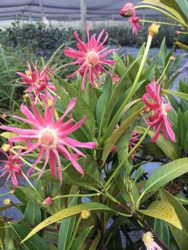
Anise 'Woodland Ruby' - Illicium mexicanum x flordanum alba - Evergreen shrub with aromatic foliage has ruby-pink starfish-like flowers which are larger than either parent and on long stems extending out from the foliage. It blooms over an extended period from May until frost. A Woodlanders Nursery introduction.
Anise
‘Florida Sunshine’ - Illicium arviflorum 'Florida
Sunshine' This Florida anise has chartreuse golden, fragrant foliage for
the warm season landscape. Leaves become hot yellow in the fall. Prefers
light shade. Glows in the winter garden. Great companion plant for
camellias. Deer resistant. Matures at 5 ft. high.
Aucuba japonica 'Variegata'
- Slow growing, this beautifully spotted Aucuba grows into a dense, rounded, evergreen shrub. It prefers rich, moist, and very well-drained soil in partial to full shade. The foliage is glossy, green blotched with yellow dots and streaks providing year-round interest.
Klimavicz Hybrid AZALEAS
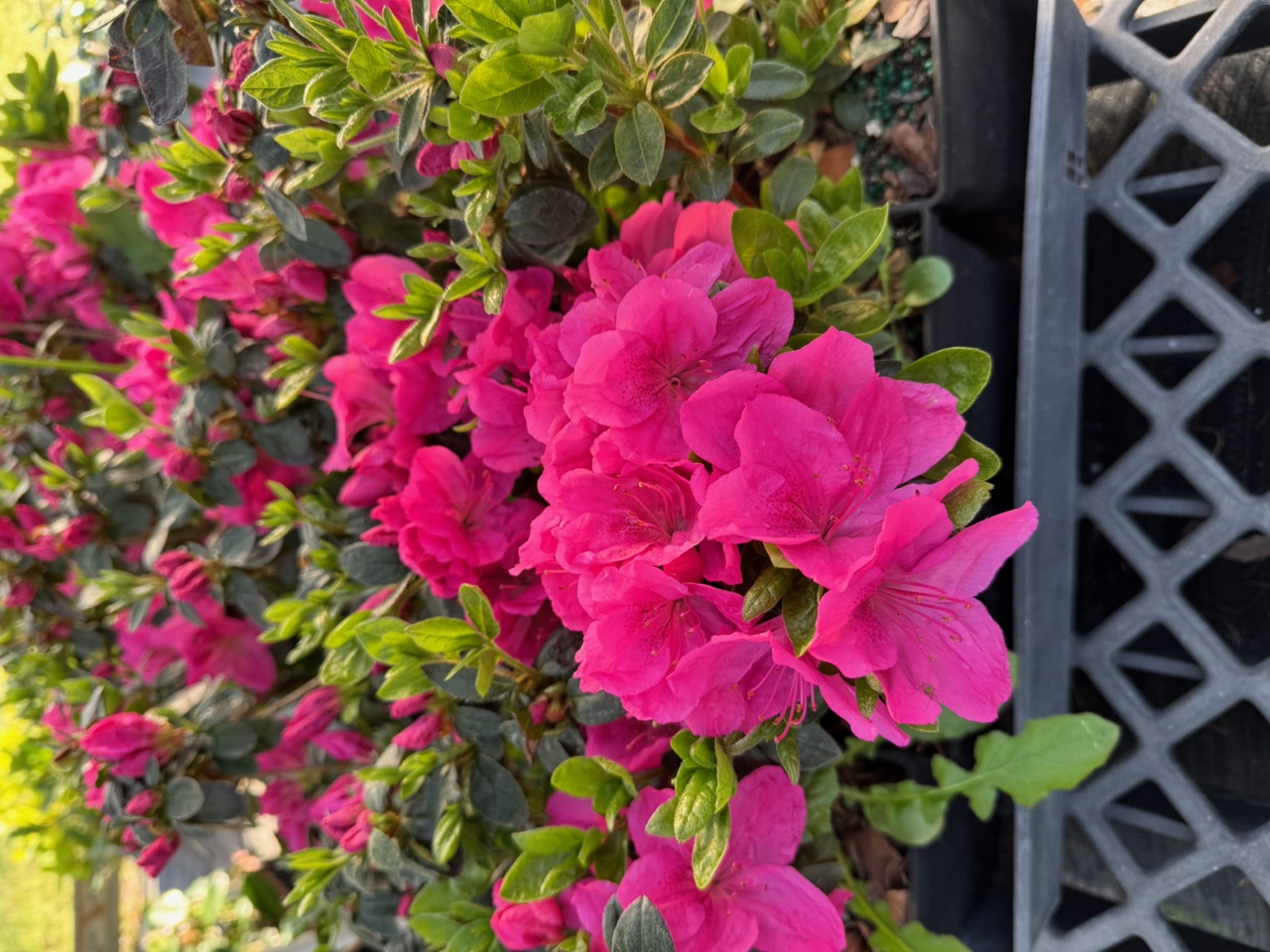
‘Spirit of Valdosta’ - 2" Single Bright Pink, Black V in blotch; Med plant, dark green [Elsie Lee x Gay Paree] Antonette Martin’ - Single, White with vivid red stripes.
‘Barbara Tozzi’ - 2" SD Pink, light, Pink flecks, very nice; Tall plant, dark green [Nancy Dippel x Florence Waldman].
‘Nancy Lynn’ - M - 2" D Pale Lavender, Yellow cast, ruffled, nice; Tall plant [Nancy Dippel x Florence Waldman].
‘Sandy Dandy’ EM - 2" S Yellow White, light Pink base of tube, very ruffled, very floriforous; Med plant [Leopold Astrid x Girard Fuchsia].
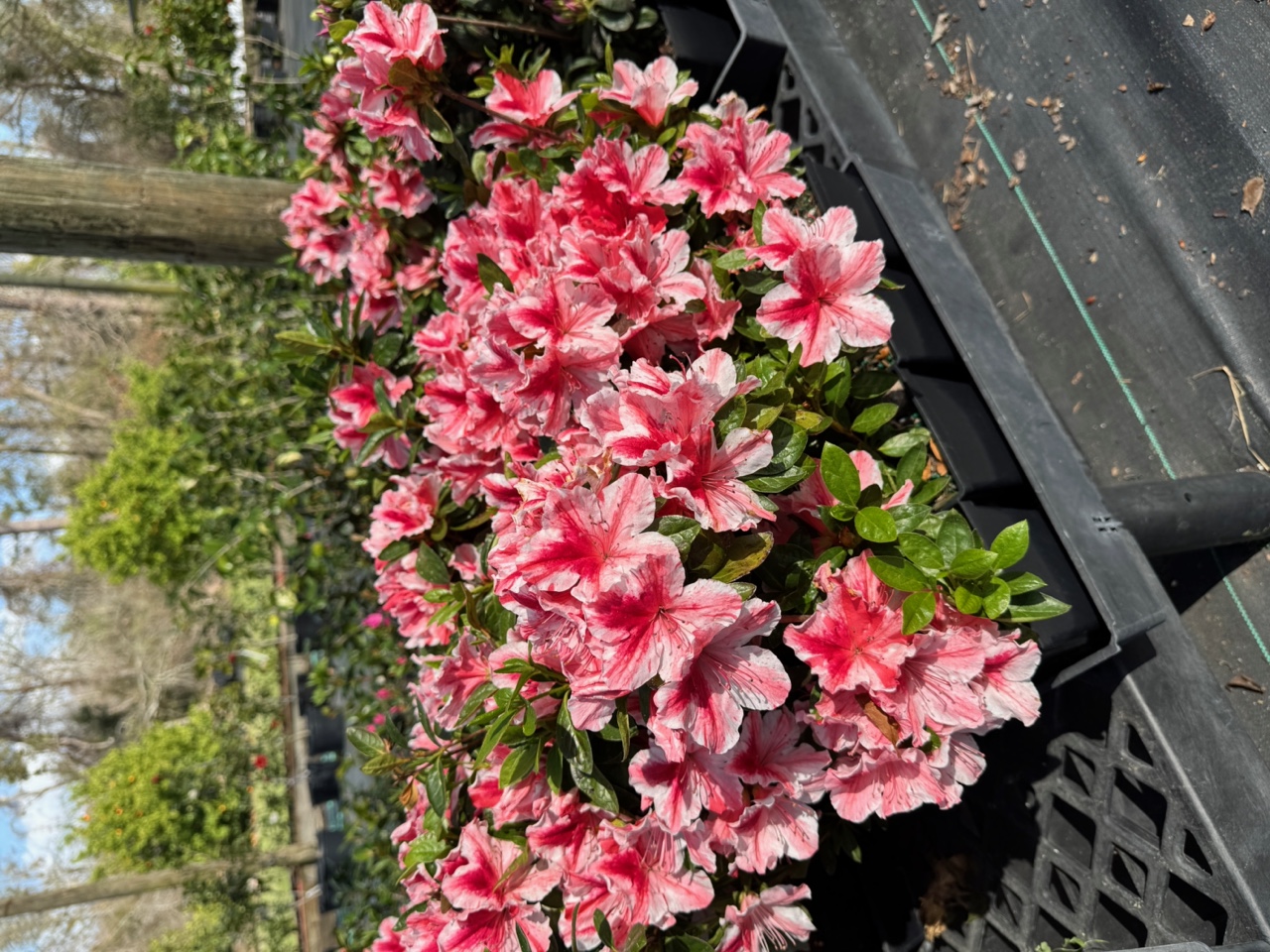
Carolyn Beck - Double flowers blush pink. Very compact grower.
Azaleas from Nuccio’s Nursery
‘Green Glow’ - Evergreen shrub grows with a mounding, rounded habit featuring leathery, dark green leaves. Produces an abundance of chartreuse, double blossom flowers that fade to luminous white throughout spring that last longer than most other azaleas
‘Kehr’s Moonbeam’ White flowers with yellow cast.
‘Purple Dragon’ - This lovely evergreen azalea is not common and it boasts attractive purple flowers with slender strap-like petals that really make a statement in any garden setting. Purple Dragon can grow to about 3' tall and bush out to about 4' wide. Place in full sun to partial shade and anticipate midseason blooms, depending where planted. Hardy to 0° F when protected from windchill.